East Africa offers travellers an extraordinary opportunity to experience two of Africa’s most remarkable wildlife encounters in one holiday. Combining gorilla trekking in Uganda with the great wildebeest migration in Kenya creates a safari that moves from the misty rainforests of the Albertine Rift to the open grasslands of the Masai Mara. Visitors can encounter endangered mountain gorillas in their natural habitat before witnessing thousands of wildebeests crossing the savannah in search of fresh grazing.
The combination suits wildlife enthusiasts, photographers, couples and adventurous travellers seeking more than one traditional game drive. With proper planning, visitors can explore Uganda’s primate-rich forests and Kenya’s wildlife-filled plains while discovering the natural beauty and cultural heritage of both countries.
Understanding the great wildebeest migration in Kenya.
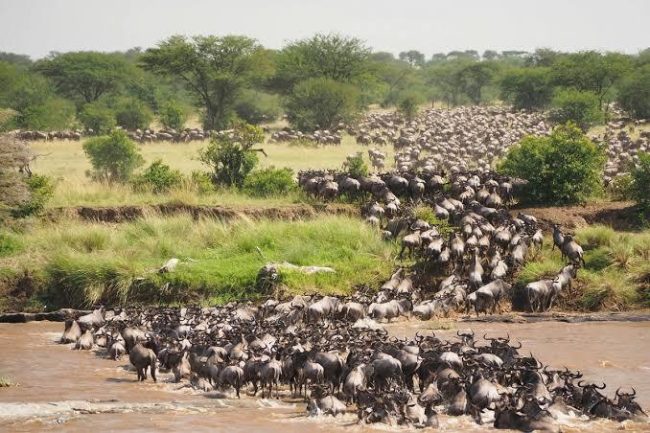
The great wildebeest migration in Kenya is one of the world’s most spectacular wildlife movements. Every year, approximately 1.5 million wildebeests, accompanied by large numbers of zebras and gazelles, move across the Serengeti-Mara ecosystem in search of fresh grass and water. Although the migration moves between Tanzania and Kenya, the Kenyan section becomes particularly famous when large herds enter the Masai Mara National Reserve.
The journey creates dramatic wildlife scenes across the plains. Visitors may see enormous herds stretching towards the horizon, calves following their mothers and predators waiting for opportunities to hunt. Lions, leopards, cheetahs, hyenas and crocodiles all form part of this complex ecosystem.
The migration doesn’t follow a fixed calendar. Rainfall patterns influence where grass grows, so the animals change direction as environmental conditions change. Their movement represents a continuous search for food and water rather than a single event occurring on particular dates.
Where does the wildebeest migration happen in Kenya?
The Masai Mara National Reserve is Kenya’s principal destination for viewing the great wildebeest migration. Located in southwestern Kenya, the reserve forms part of the northern extension of the greater Serengeti-Mara ecosystem. Its grasslands, river systems, and open plains support enormous wildlife populations.
The Mara River is one of the most famous locations associated with the migration. When herds reach the river, wildebeests must find suitable crossing points to continue their journey. Crocodiles inhabit the river, while predators sometimes wait along the banks. However, river crossings are unpredictable, and visitors may spend time watching the herds before crossing occurs.
Beyond the main reserve, conservancies bordering the Masai Mara provide additional wildlife viewing opportunities. These community-linked conservation areas often support carefully managed tourism, protect wildlife corridors, and provide income for participating landowners. Accommodation in a conservancy may offer a quieter safari experience depending on the location and visitor numbers.
Why do wildebeests migrate?
Wildebeests migrate primarily because they depend on seasonal grass and water. Rainfall determines where fresh vegetation becomes available, and the herds move to follow these changing resources. Their journey allows them to exploit different grazing areas throughout the year.
Reproduction also influences the migration. During the calving season, large numbers of wildebeest give birth within a relatively short period, particularly in Tanzania’s southern Serengeti. This helps many calves enter the world when grazing conditions are favourable. As the seasons change, the herds gradually move through the ecosystem, eventually reaching Kenya’s Maasai Mara during part of the annual cycle.
The migration demonstrates how rainfall, vegetation, animal behaviour and predator-prey relationships shape a natural ecosystem.
Best time to see the great wildebeest migration.
The most popular time for viewing the migration in Kenya is June to October, although the exact timing changes each year. During these months, large herds commonly occupy the Maasai Mara, creating excellent opportunities for wildlife viewing.
August and September are particularly popular because visitors often have good opportunities to encounter large herds and potentially witness Mara River crossings. However, no month guarantees a crossing. Some herds arrive earlier or later depending on rainfall and grazing conditions.
Travellers visiting in October may still find substantial numbers of wildebeest in the reserve, although some herds may already be moving towards Tanzania. Outside the main migration period, the Maasai Mara remains an excellent destination for viewing resident wildlife including elephants, giraffes, buffaloes and big cats.
Tips for planning a Kenya migration safari.
Book accommodation and safaris well in advance if you intend to travel during peak migration season. Camps near popular wildlife areas can fill quickly, and prices may rise during periods of high demand.
Choose accommodation according to your budget, preferred comfort level, and location. Staying inside the reserve or in a nearby conservancy can reduce travel time to wildlife viewing areas.
Allow several days for the Masai Mara rather than relying on a single game drive. Wildlife movements are unpredictable, and spending three or four nights increases your opportunities to observe different animals and potentially witness a river crossing.
Carry neutral-coloured clothing, sunscreen, a hat, binoculars and a camera with a suitable zoom lens. Follow your guide’s instructions, maintain a respectful distance from wildlife and avoid vehicles crowding animals at river crossings.
Gorilla trekking in Uganda.
After experiencing Kenya’s savannah wildlife, travellers can continue to Uganda for an entirely different adventure: mountain gorilla trekking. Uganda is one of only three countries where visitors can observe mountain gorillas in their natural habitat alongside Rwanda and the Democratic Republic of Congo.
Bwindi Impenetrable National Park.
Located in southwestern Uganda, Bwindi Impenetrable National Park is internationally recognised for its mountain gorilla population and ancient rainforest. The forest shelters numerous plant species, birds, butterflies, and other mammals, making it an important conservation area beyond its famous gorillas.
Bwindi has four main gorilla trekking sectors: Buhoma, Ruhija, Nkuringo and Rushaga. Each sector provides access to designated habituated gorilla families. Visitors receive a briefing before entering the forest with trained guides and trackers who help locate the assigned family.
The trek may take several hours depending on the gorillas’ movements and the terrain. Once visitors find their assigned group, they spend one hour observing gorillas. During this time, they may see adults feeding, mothers caring for infants, and young gorillas playing in the vegetation.
Bwindi is an excellent choice for travellers seeking a rainforest experience with several trekking sectors and accommodation options ranging from budget guesthouses to luxury lodges.
Mgahinga Gorilla National Park.
Mgahinga lies in Uganda’s southwestern corner within the Virunga Mountains. Although smaller than Bwindi, it offers beautiful volcanic scenery, bamboo forests and opportunities to encounter mountain gorillas.
The park’s dramatic landscape includes three volcanoes: Mount Muhabura, Mount Gahinga and Mount Sabinyo. Gorilla trekking here provides an opportunity to explore the Virunga environment while searching for the habituated Nyakagezi gorilla family.
Mgahinga is also suitable for visitors interested in combining gorilla trekking with golden monkey tracking and volcano hiking. Its relatively small size and striking mountain scenery make it a rewarding destination for travellers seeking a combination of private encounters and outdoor adventure.
The Ugandan gorilla permits.
A gorilla permit is compulsory for anyone who wants to track mountain gorillas in Uganda. The permit allows a visitor to participate in an organised trek and spend the designated observation period with a habituated gorilla family.
Foreign non-residents pay USD 800 per person, USD 700 for foreign residents, USD 500 for the rest of Africans, and UGX 300,000 for East Africans. Travellers should confirm the applicable tariff and eligibility requirements with the Uganda Wildlife Authority before making payment.
The permit does not automatically cover accommodation, meals, and transport to the national park or other safari activities. These expenses should he included when calculating the overall trip budget.
How to book a gorilla permit.
Travellers should secure their gorilla permits before confirming the final details of their safari. Permits are limited because only one specified number of visitors can visit each gorilla habituated family daily.
You can arrange a permit through the Uganda Wildlife Authority, with a reputable, licensed Ugandan tour operator. An operator can check availability, recommend a suitable trekking sector and coordinate accommodation, transport, and other activities.
Book several months ahead, especially if you plan to travel during June, July, August, September, December, January or February. These months generally attract many visitors because of their relatively favourable trekking conditions.
Your passport details and intended trekking date will be required during the booking process. Ensure that the permit date matches your itinerary and that you can reach the correct park sector on time.
Best time for gorilla trekking.
Gorilla trekking takes place throughout the year, but the relatively dry periods from June to September and December to February generally provide favourable hiking conditions. Trails may be easier to navigate, and visitors can enjoy more comfortable walks through the forest.
The wetter months can also be rewarding because the rainforest becomes lush and green. However, steep paths may become slippery, so appropriate hiking boots, waterproof clothing, and reasonable physical preparation are important.
Mountain gorillas live in these forests throughout the year, and sightings depend on their movements rather than a particular season.
How to combine Uganda gorillas and Kenya’s wildest migration safari.
A well-planned combined safari should allow enough time to enjoy both destinations without rushing between activities. An itinerary of approximately 8-12 days can provide a practical starting point depending on flight schedules, accommodation choices and the number of nights spent in each destination.
Travellers can begin in Uganda, complete their trekking in Bwindi or Mgahinga and then fly to Kenya for the Masai Mara safari. Alternatively, they can start in Kenya and finish in Uganda. International flights between the countries and domestic connections should be arranged around confirmed gorilla permits and the intended migration-viewing period.
Allow at least two or three nights in the gorilla trekking region, with additional time if you want to explore nearby attractions. In Kenya, consider spending three or four nights in the Masai Mara to improve your wildlife-viewing opportunities.
Before departure, confirm VISA requirements for your nationality, flight connections, baggage allowances, and entry conditions for both countries. Travellers should also check whether their chosen route qualifies for the East African Tourism VISA and verify its current conditions with official immigration authorities.