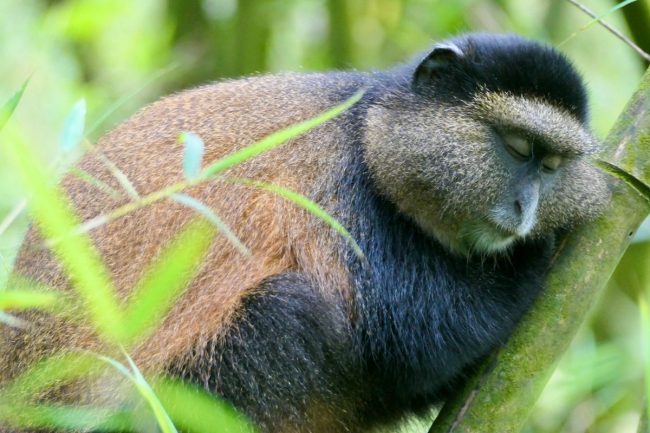
Golden monkey trekking in Volcanoes National Park is one of Rwanda’s most exciting wildlife experiences. It lets visitors explore the bamboo forests of the Virunga Mountains while observing rare golden monkeys in their natural habitat. These beautiful primates attract nature lovers, photographers, and wildlife enthusiasts who want to discover a different side of Rwanda’s rich biodiversity.
Located in northwestern Rwanda, Volcanoes National Park is famous for mountain gorilla trekking, but golden monkey trekking offers another memorable reason to visit. The activity combines a guided forest walk, wildlife observation, and an opportunity to learn about primate behaviour and conservation. It is also a suitable addition to a Rwanda safari for travellers who want to experience more than one wildlife activity.
Golden monkey trekking in Volcanoes.
Golden monkey trekking involves walking through the forest with experienced park guides to locate habituated groups of golden monkeys. The golden monkey, scientifically known as Cercopithecus kandti, is an endangered primate associated with the Virunga volcanic region. Its striking golden-orange fur, dark limbs, and expressive face make it easy to distinguish from many other monkey species.
These monkeys spend much of their time feeding, climbing, and moving through bamboo vegetation. They often travel in groups, creating exciting opportunities for visitors to observe their social interactions. You may see young monkeys playing among bamboo stems, adults searching for food, or individuals leaping between branches.
The trek usually begins early in the morning at the park headquarters in Kinigi. Visitors receive a briefing upon entering the forest with their guides and trackers. The guides explain the rules, describe the forest environment, and help visitors understand what to expect.
The time required to locate the monkeys depends on their movements and location. Some may be found after a relatively short walk, while others require a longer trek. Golden monkey tracking is generally less demanding than mountain gorilla trekking, although visitors should prepare for uneven ground, changing weather, and muddy forest trails.
Once the group locates the golden monkeys, visitors are normally allowed one hour to observe and photograph them. Their energetic movements make the experience particularly enjoyable because there is always something happening in the forest.
Best time for tracking golden monkeys.
Golden monkey tracking is available throughout the year in Volcanoes National Park. However, the dry seasons generally provide the most comfortable conditions for walking through the forest.
The first favourable period runs from June to September. During these months, rainfall is generally lower, making forest paths easier to navigate. Visitors can enjoy more comfortable hiking conditions while taking photographs and exploring the bamboo vegetation.
The second relatively dry period occurs from December to February. These months also offer good opportunities for golden monkey tracking, especially for travellers planning a wider Rwanda safari that includes mountain gorillas, cultural experiences, and volcanic mountain hikes.
The rainy seasons, particularly from March and October to November, offer a different experience. The forest becomes lush and green, creating beautiful scenery for nature photography. However, rainfall can make the trails slippery, so waterproof clothing and suitable hiking boots are important.
Although the dry months are popular, visitors should not rule out the rainy seasons. Golden monkeys remain in the park throughout the year, and sightings depend partly on their movements rather than the calendar alone. Travellers should choose dates that suit their wider itinerary, physical comfort and accommodation budget.
Golden monkey permits.
The cost of a golden monkey trekking permit depends on the visitor’s residency and nationality category. Foreign non-residents pay USD 100 per person, USD 65 for foreign residents and USD 80 for East Africans.
These prices cover the golden monkey tracking permit, but travellers should confirm what their booking includes. Transport to the park, accommodation, meals, personal equipment, and other safari arrangements may require separate payments.
Visitors can arrange permits through the Rwanda Development Board or a reputable tour operator. Booking ahead is advisable, particularly during popular travel periods because available permits may be limited. Applicants should provide accurate identification and travel details when making reservations.
Other activities in Volcanoes National Park.
Golden monkey trekking is only one of the experiences available in Volcanoes National Park. Travellers who spend additional time in the region can combine their forest adventure with several other activities.
Mountain gorilla trekking.
Mountain gorilla trekking is the park’s most famous wildlife experience. Visitors hike through the forest with trained guides to locate habituated gorilla families. Observing these endangered primates in their natural environment offers an opportunity to learn about their behaviour, family relationships, and conservation.
Gorilla trekking requires a separate permit; its cost is considerably higher than that of golden monkey tracking. Combining both activities allows visitors to experience two remarkable primates during the same safari.
Hiking the Virunga volcanoes.
The park protects Rwanda’s section of the Virunga Mountains, including Mount Bisoke, Mount Karisimbi, Mount Muhabura, Mount Gahinga, and Mount Sabyinyo. These mountains offer hiking opportunities for visitors interested in physical challenges and spectacular scenery.
Mount Bisoke is particularly known for its crater lake, while Mount Karisimbi attracts experienced hikers seeking a demanding, usually two-day climbing adventure. Each mountain has different requirements, so visitors should confirm permit arrangements, duration, and fitness expectations before booking.
Dian Fossey tomb and Karisoke Research Centre hike.
Visitors interested in wildlife research and conservation history can hike to the area associated with Dian Fossey’s work protecting mountain gorillas. The trail leads through forest landscapes towards the historic research area and the site where Fossey was buried.
The sight offers insight into the challenges of gorilla conservation and the continuing importance of protecting wildlife habitats. Visitors should prepare for a potentially strenuous walk.
Cultural experiences.
Cultural visits around the park introduce travellers to Rwanda’s traditions, music, dance, food and community life. At the Iby’Iwacu cultural village, visitors can experience cultural performances and learn about local livelihoods and community participation in conservation.
These experiences complement wildlife tracking by showing how tourism can support communities living near protected areas.
Exploring the twin lakes.
Lake Bureera and Lake Ruhondo lie outside the park and offer opportunities to appreciate northern Rwanda’s beautiful countryside. Visitors enjoy scenic viewpoints, photography, and selected boat excursions, depending on local arrangements and weather conditions.
The surrounding hills, cultivated landscapes and peaceful lakes provide a relaxing contrast to a morning spent walking through the forest.